




Villain Playbook: The Revolutionary — Creating a Memorable D&D Villain
Every kingdom has its breaking point.
Sometimes it’s a king who taxes the poor while the nobility feasts. Sometimes it’s a council that has ruled for generations without listening to the people it claims to represent. And sometimes it’s a system so thoroughly corrupt that the only way to change it is to tear it down.
Enter the Revolutionary.
This villain doesn’t want to sit on the throne simply because they believe it’s their birthright. They want to change who gets to sit there, whether the throne should exist at all, and what happens to everyone who benefited from the old order.
They have a cause. They have followers. They have a vision of a better future.
And they’re willing to do terrible things to make that future happen.
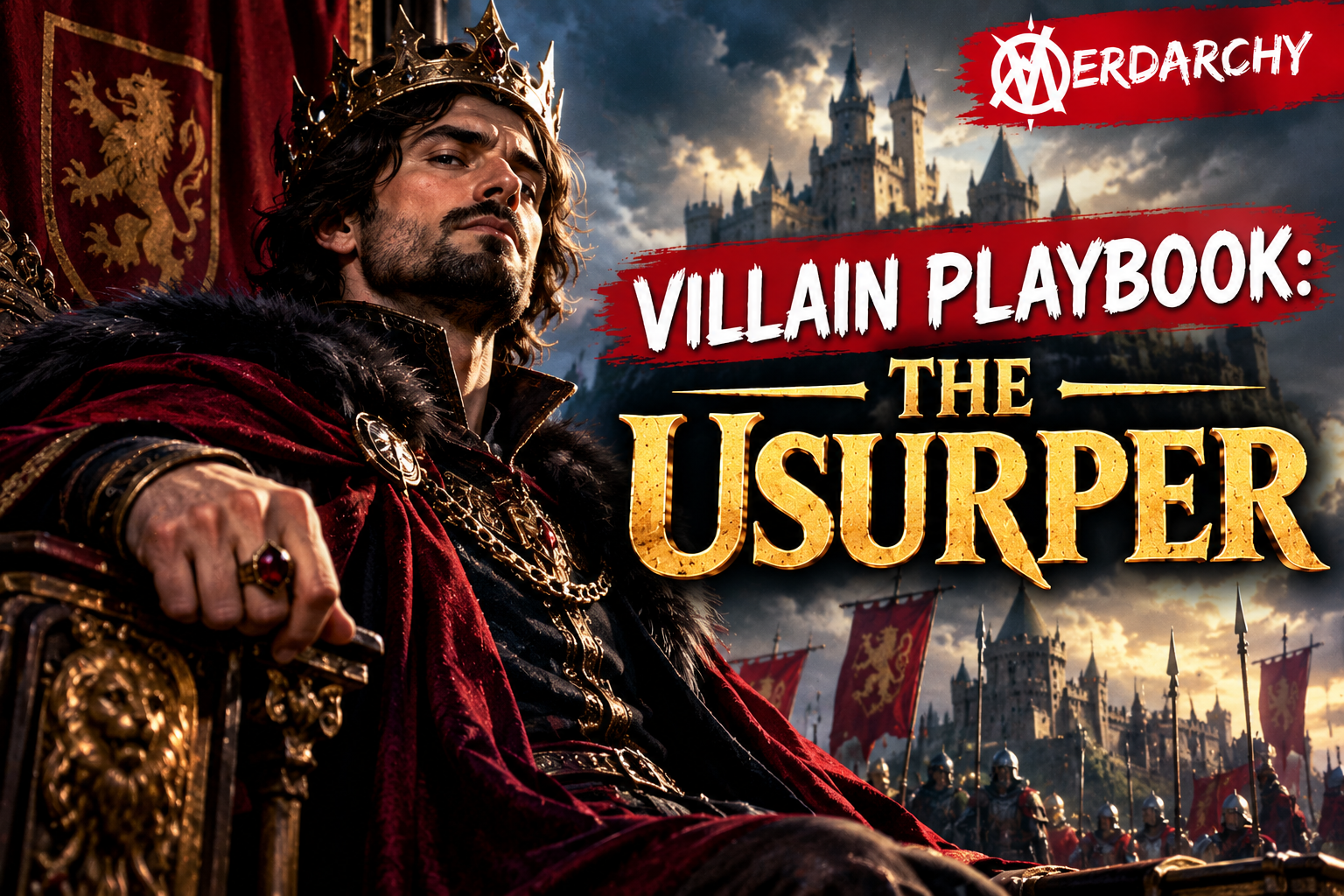
Welcome back to the Villain Playbook, our continuing series exploring memorable antagonists for Dungeons & Dragons and other tabletop RPGs. In our previous installment, we examined the D&D Villain playbook: Usurper, a villain who believes the kingdom  belongs in their hands. The Revolutionary takes a different approach. They might not want the crown, the palace, or any of the privileges enjoyed by the ruling class.
They want to change the world.
The trouble begins when the Revolutionary decides that anyone standing in the way of that change deserves whatever happens to them.
What Is the Revolutionary Villain Archetype?
The Revolutionary is a villain who seeks to overthrow an established system and replace it with something they believe is better. Their target might be a monarchy, a corrupt government, a powerful church, a wealthy merchant council, or even the structure of an entire magical society.
Unlike the Usurper, who wants to replace the person in charge, the Revolutionary wants to challenge the rules that put that person there in the first place.
Perhaps the kingdom’s nobility has spent centuries exploiting the common folk. Maybe a powerful guild controls every magical resource in the realm, leaving ordinary people with no chance to improve their lives. The Revolutionary might be fighting against a religious institution that persecutes anyone who practices forbidden magic, or a society that treats entire ancestries as second-class citizens.
Their grievances can be legitimate. Their goals might even be admirable.
That’s what makes this villain such a useful addition to a D&D campaign.
A Revolutionary doesn’t need to invent an injustice to rally people to their cause. They can point to problems the characters have witnessed themselves. The party might have seen villages crushed by unreasonable taxes, adventurers denied work because of their ancestry, or innocent people imprisoned for criticizing the crown.
The Revolutionary offers an answer.
Burn the old laws. Remove the ruling class. Destroy the institutions that protect the powerful.
Build something better.
The danger lies in what happens when the Revolutionary stops asking whether their methods are justified and starts insisting that victory justifies everything.
Why the Revolutionary Makes a Great D&D Villain
The Revolutionary creates conflict that reaches beyond a single dungeon, monster, or treasure hoard. Their actions can affect entire communities, forcing the party to consider the consequences of choosing one side over another.
Imagine the characters arrive in a city where a rebellion has broken out. The royal guards are fighting street battles with armed citizens, merchants have barricaded their shops, and the city gates have been closed.
The king claims the rebels are dangerous criminals. The Revolutionary’s supporters insist they’re fighting for freedom.
Both sides have reasons for their actions. Both sides have something to hide.
The party might initially be hired to protect an official, escort a noble family to safety, or recover a stolen cache of weapons. As the characters investigate, they discover that the government has been abusing its authority for years. They also learn that the Revolutionary has ordered attacks against people who had little to do with the oppression.
Now the characters face a much more difficult problem than simply defeating the bad guys.
Can they oppose the Revolutionary without defending the corrupt system that created them? Can they help the people without allowing the rebellion to become another form of tyranny?
Those questions create memorable adventures because the players must make decisions rather than simply identify the villain and swing their weapons.
The Revolutionary is particularly effective in campaigns where the party has developed relationships with towns, factions, nobles, guilds, or ordinary citizens. The more the players care about the people affected by the conflict, the more meaningful their decisions become.
How to Introduce a Revolutionary in Your D&D Campaign
Don’t begin with a burning palace or an army marching toward the capital.
Start by showing the players why people are angry.
The party arrives in a mining town where workers are forced to surrender most of their earnings to a distant noble. Local guards arrest anyone who protests, while the noble’s agents enjoy comfortable lives in a fortified manor.
The characters might be hired to escort a shipment of valuable ore, investigate a series of thefts, or track down a group of bandits attacking the noble’s supply caravans.
During their investigation, they discover that the supposed bandits are members of a resistance movement. The stolen supplies are being distributed to families who have lost their homes, and the group’s leader has become a folk hero among the miners.
That leader is the Revolutionary.
At first, the party might see little reason to oppose them. The noble is cruel, the workers are desperate, and the rebels are doing what the authorities refuse to do.
Then the situation changes.
The Revolutionary orders an attack on a convoy carrying food because the shipment belongs to the noble. Unfortunately, the food is intended for an entire settlement. Or the rebels sabotage a bridge to stop military reinforcements, trapping innocent travelers on the wrong side of a river.
The party begins to realize that the Revolutionary’s cause and the Revolutionary’s decisions are no longer the same thing.
This approach lets the players discover the villain’s appeal before witnessing the consequences of their methods. It also gives the DM room to introduce allies, competing factions, and alternative solutions before the conflict escalates into open warfare.
Give the Revolutionary a Cause Worth Fighting For

Bard vs Warlock
A Revolutionary who simply wants to destroy everything is easy to understand but rarely interesting for long. Give them a specific grievance that explains why they began fighting in the first place.
Perhaps the kingdom’s laws allow wealthy families to purchase their way out of military service, leaving poor communities to provide the soldiers who die in the crown’s wars. Maybe the church has outlawed certain forms of magic and hunts anyone suspected of practicing them. The Revolutionary could be fighting to end slavery, dismantle an exploitative guild system, or remove a ruling council that has ignored generations of suffering.
The cause should be concrete enough that the players can see its effects.
Who suffers under the current system? Who benefits from it? What would change if the Revolutionary succeeded?
You don’t need to make the existing government irredeemably evil. In fact, the conflict becomes more interesting when the old order provides some genuine benefits alongside its abuses. Perhaps the royal army protects the kingdom from monstrous invasions, even as its commanders exploit the people they’re supposed to defend. Maybe the ruling council maintains a magical barrier that keeps a terrible threat outside the city, but demands an unbearable price from the citizens who sustain it.
The Revolutionary may be right about the problem while being dangerously wrong about the solution.
That distinction gives the party room to challenge both the villain and the system they oppose.
The Revolutionary Needs Followers
A rebellion requires more than a charismatic leader. It needs people willing to take risks, sacrifice their livelihoods, and sometimes die for the cause.
Some of the Revolutionary’s followers might be idealists who genuinely believe in a better future. Others could be people who have lost family members to the ruling class, veterans abandoned after a war, or workers who have spent their lives trapped in poverty.
Not everyone will understand the full extent of the Revolutionary’s plans.
A local organizer might believe they’re helping distribute food and medicine. A group of young rebels could think they’re fighting for political reform. A seasoned commander might know that the movement is preparing to overthrow the government by force.
This creates opportunities for the party to interact with the rebellion without every encounter turning into a battle.
The characters might negotiate with a rebel captain, rescue an imprisoned organizer, or convince a group of followers to abandon an operation that would endanger civilians. They could discover that some members of the movement oppose the Revolutionary’s increasingly extreme methods but fear what will happen if they speak out.
These relationships make the rebellion feel like a real movement rather than a collection of interchangeable enemies.
They also create a useful complication: defeating the Revolutionary won’t automatically resolve the problems that brought people to their cause. If the party wants lasting peace, they’ll need to consider what happens to the movement’s supporters and whether the old system can survive without repeating its mistakes.
The Revolutionary’s Playbook: From Protest to Rebellion
A Revolutionary rarely begins with the intention of becoming a monster. Their transformation can be gradual, with each escalation seeming reasonable in the moment.
First, they expose the injustice. The Revolutionary gathers evidence of corruption, organizes public protests, distributes pamphlets, or recruits respected figures to support reform. They might initially work within the law, believing that exposing the truth will force those in power to change.
Next, they build a movement. Secret meetings become organized cells. Local supporters spread messages between towns. Wealthy sympathizers provide funding, while sympathetic soldiers supply weapons and intelligence. The Revolutionary’s name becomes a rallying cry.
Then, peaceful methods begin to fail. The government arrests organizers, censors information, or uses force to break up demonstrations. The Revolutionary argues that the authorities have made peaceful reform impossible. Sabotage and theft become acceptable tactics, at least in the eyes of the movement’s leadership.
After that, the rebellion becomes violent. Government buildings are attacked, supply lines are sabotaged, and officials are targeted. The Revolutionary begins demanding loyalty from people who once supported the cause voluntarily. Those who question the methods are accused of betraying the movement.
Finally, the Revolutionary decides what comes next. The movement might launch an assault on the capital, execute captured officials, or seize control of the institutions it once promised to dismantle. The Revolutionary insists these actions are temporary necessities, but the new leadership begins adopting the same methods of control it once condemned.
This progression gives the DM a framework for building a campaign around the rebellion. The party can encounter the movement at different stages, influence its direction, and decide when its actions have become unacceptable.
The Revolutionary doesn’t need to follow every step. A party that exposes government corruption might help peaceful reform succeed, while characters who publicly humiliate the rebels could push moderates toward more extreme factions.
Let the players’ decisions shape the conflict rather than treating the rebellion as a sequence of events that must happen regardless of their actions.
Make the Revolutionary More Than a Charismatic Leader
Charisma is a useful trait for this villain, but it shouldn’t be their only strength.
A Revolutionary might be a brilliant strategist who understands how to defeat a larger army. They could be an influential scholar who has spent years documenting the ruling class’s crimes, or a former military commander who knows exactly how the kingdom’s defenses work.
Perhaps the Revolutionary is a powerful spellcaster whose magic allows them to undermine institutions that have relied on magical superiority for generations. Maybe they have no extraordinary abilities at all. Their strength comes from their ability to organize people who have been ignored, exploited, or underestimated.
Consider giving them a skill the party genuinely respects.
The Revolutionary might be an exceptional negotiator who can unite rival communities, a gifted engineer who designs ingenious ways to overcome the crown’s defenses, or a healer who has spent years treating people abandoned by the government.
These abilities help explain why people follow them and why the party can’t simply dismiss them as a dangerous fanatic.
They also give the villain something to lose. Perhaps the Revolutionary was once a compassionate leader who spent years helping their community before concluding that meaningful change could only come through violence. Their former allies may still remember the person they used to be, even as the Revolutionary becomes someone they can no longer support.
That history can make a confrontation with the villain far more compelling than a simple clash between good and evil.
Running the Revolutionary Beyond Combat

Warlock making their 1st bargain.
A Revolutionary is an excellent villain for adventures involving investigation, diplomacy, infiltration, and difficult choices.
The party might be asked to infiltrate a rebel meeting, recover a stolen ledger, protect a witness, or prevent an attack on a crowded public gathering. They could escort a negotiator through hostile territory, investigate a government operation designed to discredit the rebellion, or discover that a supposed rebel attack was actually arranged by the authorities.
Combat should remain an option, but it shouldn’t be the only way to interact with the movement.
A fight against the Revolutionary’s forces might take place in a factory, a crowded market, a fortified hideout, or a ruined temple used as a rebel headquarters. The characters could face trained soldiers, improvised traps, magical sabotage, or desperate defenders who believe defeat will bring reprisals against their families.
Give the party objectives beyond defeating enemies. They might need to disable a weapon without destroying the surrounding neighborhood, rescue hostages before an explosion, or prevent both sides from attacking during a fragile negotiation.
These encounters help the players see the human cost of the conflict.
They also give the Revolutionary opportunities to make their case. A captured rebel might ask why the party protects the same nobles who ordered their family evicted. A government official might insist that the rebellion’s crimes prove why harsh laws are necessary.
The characters don’t have to agree with either side, but they should have enough information to understand why the conflict continues.
The Revolutionary’s Greatest Weakness
The Revolutionary’s greatest weakness is often their inability to accept that they might be wrong.
When someone has spent years fighting injustice, compromise can begin to look like surrender. Every delay seems like another opportunity for the powerful to escape consequences. Every disagreement becomes evidence that someone doesn’t care enough about the cause.
Eventually, the Revolutionary stops listening to the very people they claim to represent.
They might reject a peaceful settlement because it doesn’t deliver everything they demanded. They could punish members of their own movement for questioning an operation, or refuse to acknowledge that their decisions have harmed the communities they wanted to protect.
This gives the party an opportunity to challenge the villain’s assumptions.
Perhaps the characters discover that a proposed reform would accomplish much of what the Revolutionary originally wanted, but the leader refuses to accept it because it would leave some members of the ruling class in power. Maybe a trusted lieutenant presents evidence that an attack will cause more suffering than it prevents, only to be dismissed as a coward.
The Revolutionary may have begun with a willingness to fight for ordinary people. Now they believe they alone have the right to decide what those people need.
Another useful weakness is the gap between the Revolutionary’s vision and their practical plans. They might know exactly what they want to destroy but have no realistic idea how to replace it. The party could expose the consequences of that failure by revealing how the rebellion plans to feed the city, maintain public safety, or protect the kingdom from external threats once the government falls.
The villain’s cause may survive these revelations. Their claim to be the only person capable of leading it might not.
When the Revolutionary Goes Too Far
Eventually, the Revolutionary needs to cross a line that forces the party to confront what the movement has become.
Perhaps they order the destruction of a bridge used by both military forces and civilian travelers. Maybe they arrange an assassination that kills the intended target’s family as well. They might seize food supplies meant for a starving city, insisting that the people can endure temporary hardship for the sake of victory.
Or the Revolutionary could decide that anyone who refuses to join the movement is supporting the enemy.
This is where the villain’s original ideals become a source of conflict rather than a justification for their actions.
The Revolutionary may still talk about freedom, equality, and justice. They might insist that their enemies are responsible for every death because the rebellion would never have been necessary if the old system had changed peacefully.
Some of that argument may even be true.
But the party must decide whether the Revolutionary’s goals excuse the methods they’re using. How many innocent people should suffer for a future they may never live to see? What happens when the movement begins punishing people for failing to support it? Can a revolution create a better society if its leaders refuse to tolerate disagreement?
The most effective turning point is one that gives the party a chance to act. They might prevent an attack, rescue people marked for execution, or expose the Revolutionary’s plan before it can be carried out.
The villain’s response matters, too. Perhaps they regret the consequences but insist that the operation was necessary. Maybe they blame a subordinate, or admit that innocent people will suffer but refuse to change course.
The party should have a clear reason to oppose the Revolutionary, even if they continue to believe the original cause deserves support.
The Final Confrontation: What Happens After the Revolution?

Paladin trying and failing to babysit the bard and rogue.
The final confrontation with a Revolutionary shouldn’t simply be a battle against the movement’s leader. It should force the party to confront the future the rebellion is trying to create.
Perhaps the rebels have breached the palace and the Revolutionary is preparing to execute the royal family. The characters must decide whether to protect the monarch, expose the ruler’s crimes to the assembled rebels, or find another way to prevent a massacre.
Maybe the Revolutionary has seized control of the city’s magical defenses and intends to destroy the fortress where the ruling council has taken refuge. The same defenses protect the city from an approaching monster, meaning the party has only a short time to stop the attack before the entire settlement becomes vulnerable.
Or perhaps the rebellion has already succeeded. The old government has fallen, and the Revolutionary is preparing to establish a new order. The party discovers that the new leadership plans to imprison political opponents, seize private property without a hearing, or force every citizen to swear loyalty to the movement.
The characters have to decide what victory means.
They could defeat the Revolutionary in combat, expose the worst abuses of the movement, or convince enough followers to demand a different path. They might negotiate an agreement that preserves necessary institutions while dismantling the corrupt ones, or help establish a new government that prevents either side from claiming unchecked authority.
The best outcome depends on the campaign and the party’s choices. There doesn’t need to be a perfect solution, and the characters shouldn’t be expected to rebuild an entire kingdom overnight.
What matters is that their decisions influence what happens after the fighting ends.
If they spent the campaign building trust with moderate rebels, those allies might help prevent the movement from descending into vengeance. If they protected ordinary citizens on both sides, they might have the support needed to negotiate a settlement. If they focused entirely on defeating the Revolutionary, they might win the battle but leave a power vacuum that another villain can exploit.
The Revolutionary’s defeat should resolve the immediate threat while leaving the party with a meaningful understanding of what their actions have changed.
The Twist: What If the Revolutionary Is Right?
For a particularly challenging campaign, consider making the Revolutionary’s accusations completely true.
The king really is corrupt. The ruling council really has been exploiting the poor. The church really has persecuted innocent people. The government has had opportunities to reform and repeatedly chosen to protect its own interests.
The Revolutionary isn’t inventing the problem. They’re responding to it.
The twist is that the party discovers a peaceful solution might be possible, but it requires cooperation from people who have spent years treating the rebels as enemies. A group of nobles is willing to support reform, a respected general is prepared to withdraw the army, or a council member has evidence that could expose the worst abuses of the existing system.
The Revolutionary refuses to listen.
They believe the offer is a trick. They suspect the reforms will be delayed, weakened, or abandoned once the immediate threat disappears. Their distrust may be entirely understandable given what they’ve experienced.
Now the party must decide whether to support the Revolutionary’s immediate goals, work toward a compromise, or pursue another solution that neither side fully accepts.
This twist works especially well when the party has spent time building relationships with people affected by the conflict. A rebel leader might be someone the characters once helped. A government official might have saved their lives. A community could depend on the Revolutionary’s victory while fearing what will happen if the movement becomes more extreme.
The players don’t need to agree on the right answer. In fact, disagreement between the characters can make the story even more memorable.
The Revolutionary becomes a compelling villain not because their cause is false, but because a legitimate cause doesn’t guarantee that its leader will make the right choices.
Creating Memorable D&D Stories With the Revolutionary
The Revolutionary works because the conflict is about more than defeating a powerful enemy. It’s about justice, loyalty, change, and the danger of believing that a worthy goal excuses every action taken in its name.
This villain can be a former soldier, a disgraced noble, a scholar, a priest, a community organizer, or an ordinary person who has finally decided that the existing system cannot be allowed to continue. Their followers might include idealists, desperate families, experienced fighters, and people who simply have nowhere else to turn.
That variety makes the Revolutionary useful for campaigns of almost any scale. A local rebellion against a cruel baron can provide the foundation for a short adventure, while a movement seeking to overthrow an empire can drive an entire campaign.
You don’t need to make the villain secretly evil from the beginning. Let them have genuine reasons for fighting. Give their followers believable motivations. Show the party what needs to change, then let the players discover what happens when the Revolutionary becomes convinced that only their methods can bring that change about.
You want the characters to understand why people follow the villain. You want them to question the authorities who created the conditions for the rebellion. And when the conflict reaches its climax, you want them to recognize that defeating the Revolutionary and solving the kingdom’s problems are two different challenges.
Because the most dangerous Revolutionary isn’t the one who wants to change the world.
It’s the one who believes the world has no right to disagree with them.
Continue the Villain Playbook Series
The Villain Playbook has explored a growing collection of antagonists, including the False Hero, Revolutionary, Puppet King, Corrupt High Priest, Fey Manipulator, Immortal King, Crime Lord, Dragon Behind the Throne, World Ender, Benevolent Tyrant, Fallen Paladin, False Prophet, Master Thief, and most recently the Usurper.
We’ve seen villains who manipulate belief, steal treasures, claim the throne, and pursue power through a variety of schemes. The Revolutionary brings us back to the question of what happens when the existing system deserves to fall, but the person leading the fight becomes just as dangerous as the people they oppose.
But not every villain needs to seize power through a rebellion or a political conspiracy.
What happens when someone already has control of the kingdom and genuinely believes they’re doing what’s best for everyone? What if their rule brings peace, prosperity, and security, but only because nobody is allowed to challenge them?
Next time in the Villain Playbook, we’ll explore The Benevolent Tyrant again from a fresh angle: a ruler who promises to protect their people, even if it means taking away their freedom.
Thanks for reading. Until Next Time, Stay Nerdy!!





No Comments